
Pashmina Scarves

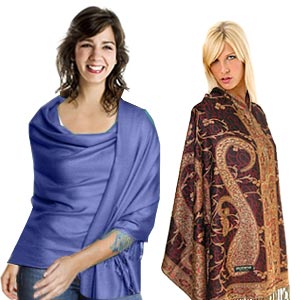
The term 'Pashmina' is derived from the Persian word 'pashm' meaning 'wool.' As the name implies, pashmina shawls and scarves are made from fine cashmere wool coming from the special breed of Pashmina goat. Kashmir in India has become synonymous with Pashmina scarves shawls all over the world.
Hand spun and woven, pashmina Kashmir shawls are of significantly high quality and made from the fine cashmere wool. The shawls are an outstanding work of delicacy with weft threads interlocking with changing colors between the incredible warps. The symphony of color schemes is peculiarly charming and architectural and mythological figures are interwoven with landscape designs in the shawls. The silky softness of the shawls sets them apart from ordinary woolen shawls.
Buying and owning an intricately embroidered Kashmiri pashmina is considered prestigious as it simply would cost a whooping US $ 10,000 a piece at certain trendy boutiques in the US and UK.
Making of Pashmina shawls
Pashmina shawls are made from the wool of a specific goat found in high altitudes, approximately 14,000 feet above sea level. These special goats grow a thin, inner coat of hair which practically insulates them from the harsh Himalayan winters. The hair is durable and very soft and comfortable on the wearer's skin. But some people still find pure pashmina somewhat rough, and hence manufacturers use a softening process on the pashmina giving it an almost silken quality. This processed pashmina is called cashmere.
Pashmina wraps
Hand woven pashmina jamawar shawls display intricately crafted needle work, exquisite embroidery sometimes covering the entire surface, true to its name 'jamawar'. Jamavar shawls truly reveal the excellent integration of fine and soft pashmina and scroll designs and come in dark and light eye catching hues and style patterns.
Pure pashmina shawls are exceedingly charming and they are soft and warm displaying the skill of the weavers' hand. Pashmina shawls also come light weighted and are donned not only for warmth but to make a fashion statement. Designer pashmina shawls in delightful colors with paisley and other figurative patterns that lend a unique glamour display a luxurious life style and a perfect choice for the discerning buyer.
Indian pashmina shawls provide enchanting designs in red and black contrasting colors. Beaded pashmina shawls are immensely attractive with beads and hanging fringes and at the same time are useful in providing the wearer cozy warmth in cold climes.
Original pashmina shawls do not contain viscose or other synthetics. Popular Pashmina shawls contain 70% pashmina and 30% silk blend with elegant sheen and drape and are tightly woven. Common ratio for pashmina shawls is 50% to 50% and soft and lightweight. The higher the content of wool, the more expensive would be the shawl/scarf.
Pashmina scarves
The versatile and highly comfortable pashmina scarves are never out of date. Pashmina scarves come made with delicate yarns blended with silk for that beautiful sheen finish and strength. These scarves are suitable for any occasion, be it is an intimate dinner or a formal occasion or a wedding party.
Pashmina scarves lend the wearer pure warmth and luxury. The normal scarf size is 12 inches x 60 inches. They come in a wide medley of colors, shapes and sizes. As these scarves are naturally soft they do not need much artificial enhancement and come in delicate patterns with embroidery imparting a feminine look. Very rarely these scarves are decorated with beads and sequins on the tassels, fringes and edges of the scarves.
Maintenance of pashmina shawls and scarves
Pashmina is a versatile accessory and with proper handling and care it can last for a life time. Pashmina shawls/scarves can be washed in cold water with a gentle shampoo although professional dry cleaning is suggested. Never wash pashmina in a washing machine or dryer. Tassels in scarves / shawls need to be unwound before wash. The scarf has to be rolled very gently in a towel. Blot it and lay it flat to dry. The items have to be placed flat to dry and not wrung dry. Ironing on pashmina has to be very carefully done.
It is recommended to place a piece of paper or fabric between the iron and Pashmina. The shawls/scarves need to be stored in a bag away from moisture and light and insect bites. Do not store wool in a damp place. Sharp objects and belts can cause irrepairable damage to Pashmina. Therefore it is important to take care what is worn with pashmina. Also be careful not to stain pashmina with makeup items or lipstick. Pashmina is indeed a treasure and calls for careful delicate handling.
Pashmina - Fast facts
- Pashmina is expensive due to the fact that individual strands are six times smaller than the average human hair.
- Sometimes manufacturers bring down the cost of pashmina accessory by blending it with rabbit fur or wool.
- Pure pashmina is gauzy weave as the fiber cannot tolerate high tension.
- Pashmina gets softer with use.
- It is very warm due to its insulating properties.
- It is estimated that nearly 50,000 pashmina shawls are woven in Kashmir in a year.
Pashmina shawl and scarves could be a perfect gift for a loved one. These accessories stand evidence to the superb workmanship matched with magnificent hand embroidery. A pashmina shawl is classic and timeless and yet modern and fashionable.
Top of the Page: Pashmina Scarves
Tags:#Pashmina shawls #Pashmina scarves #Pashmina stole #Pashmina wrap
 Shopping Guide
 How to Dress Slimmer
Petite Dresses
Lace Sheath Dress
Dressy Tops for Women
Pea Coats for Women
Church Suits
Cocktail Dress
Little Black Dress
Prom Dress
Semi Formal Dress
Women's Skirt
Women's Fashion - Women's Apparel
Fashion Apparel for Women
Tummy Tuck Jeans
Women Designer Jeans
Tank Tops
Cashmere Sweater
Mohair Sweater
Winter Wedding Dress
Summer Wedding Dress
Winter Boots
Winter Coat
Dress for Bride's Mother
Baby Christening Gown
Silk Scarf
Pashmina Scarves
Halter Dresses
Women Undergarments
 Sheer Camisole
 Underwire Bra
Body Shapers for Women
Women's Undergarments
Sheer Lingerie
Women Sleepwear
Women Casual Wear
 Travelling Clothes for Women
 Fall Wedding Colors
Fall Fashion Trend
Jogging Clothes
Leggings
Tights
Parka
Corset
Summer Clothes
Summer Dress
Summer Long Dress
Sundresses
Vintage Evening Dress
Wedding Veil
Beach Wedding Dress
Women's Hosiery
Nylon Stockings
Maternity Apparel
Maternity Jeans
Athletic Apparel
Leather Apparel for Women
Indian Saree Shopping
How to wear a Saree
Halloween Costume
Womens Tunic Dress
Sequin Dresses
Wrap Dress
Charmeuse Dress
Ruffle Dress
Top of the Page: Pashmina Scarves
Popularity Index: 101,270