
Caring for Diamond Jewelry

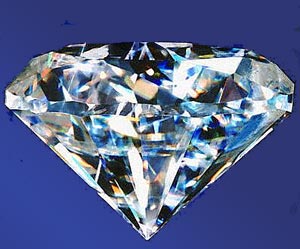
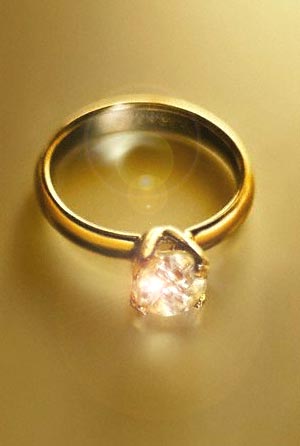
Diamond jewelry will always be in a league of it's own. Men will continue to swear love by it. A diamond ring will always be part of a woman's heart that she will keep on her finger. The brilliance of diamonds has dazzled mankind for centuries. Engagement rings and wedding rings usually have diamonds embedded in them.
The 4 Cs of diamonds
Cut: The cut of the diamond determines its brilliance. A stone that is poorly cut will lose light through the sides and bottom and result in reduced radiance. A well-cut diamond will internally reflect light from the mirror-like facet to another and disperse as well as reflect it through the top. The result is a brilliance that is unmatched. A round diamond generally reflects all the light that enters it on account of its symmetry.
Color: You can find diamonds from icy whites to warm whites, from subtle pinks to various hues of blue and green. The color scale established by the GIA ranges from D (colorless) to Z. Warm colored diamonds fall in the range of (K-Z) whereas the icy stones fall in the (D-J) range.
The true color of a diamond can be gauged under controlled lighting conditions. Truly colorless stones are rare and therefore highly priced. There are many factors that affect the color of a diamond. Presence of trace elements gives some diamonds a different tinge and shade. The presence of nitrogen can impart a yellowish tinge to a diamond.
Certain settings can work wonders on some stones. A stone that is slightly yellow can be made to appear colorless by mounting it in a white-gold setting. The lighting conditions have a role to play in determining the color of a diamond. HPHT (high pressure/ high temperature) processing can change the color of some diamonds.
Clarity: The most precious diamonds are the clearest. Most diamonds have natural identifying characteristics such as minerals or fractures and these are known as 'inclusions'. The Gemological Institute of America (GIA) has established a scale of perfection known as clarity. The range can vary from F (Flawless) to Included (I). The imperfections can be studied by a jeweler with the help of a magnifying loupe.
Carat: This refers to the weight of the diamond. Consequently stones of higher carat value are more expensive. One carat is equivalent to 200 milligrams.
Diamond settings and shapes
There are different types of diamond settings - bar, channel, invisible, pavé and prong. Each setting style has its own beauty and charm. A bezel setting is more secure than the others. It includes a rim encircling the diamond and makes it appear larger. A pavé setting is made up of small diamonds set side by side into little holes giving an appearance of a continuous surface of diamonds. Elongated diamonds such as oval,
pear and marquise appear larger than round diamonds of the same weight. A round diamond continues to remain an all-time favorite.
Care of diamond jewelry
Your precious diamond jewelry is best stored in individual jewelry cases or cloth pouches. Products such as lotions, soaps, perfumes and powders and hair sprays can affect the brilliance of the diamonds by leaving a film on them. Diamond has the property of repelling water but readily accepts wax and grease.
This causes it to get greasy and soiled. The diamond jewelry needs to be cleaned with care. Soaking the jewelry for a short
while in a solution of liquid dish washing and following it with a mild and gentle scrubbing can do wonders for your precious ice stones. The jewelry can be patted dry with a lint-free cloth. You can get your diamond
jewelry professionally cleaned once a year or so.
Do not wear your diamond rings or ear studs when participating in sports and swimming. Though diamonds are one of the hardest materials known to man, they can be chipped by hard impact. A little care can go a long way in maintaining the brilliance of these icy stones.
Top of the Page: Caring for Diamond Jewelry
Tags:#diamond jewelry #care diamond jewelry
 Fashion Trends - Fashion Jewelry
 Necklace
Italian Charm Bracelet
Wedding Tiara
Egyptian Jewelry
Hawaiian Jewelry
Swarovski Crystal Jewelry
Gemstone Jewelry
Birthstone Colors
Opal Jewelry
Caring for Gold Jewelry
Gold Bangles
Ballerina Jewelry Box
Bridesmaid Jewelry
Caring for Diamond Jewelry
Caring For Silver Jewelry
Platinum Jewelry
Amethyst Jewelry
Garnet Jewelry
Ruby Jewelry
Religious Jewelry
Cultured Pearl Jewelry
Earring Guide
Belly Chain
Turquoise Jewelry
Jade Jewelry
Titanium Wedding Band
Top of the Page: Caring for Diamond Jewelry
Popularity Index: 101,068