
Liver Supplements

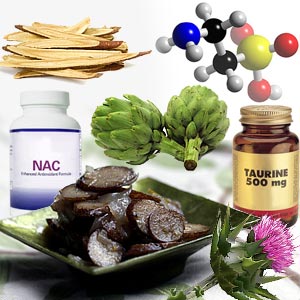
The liver breaks down complex drugs and nutrients from the blood passing through it into simpler forms that can be easily absorbed by other organs. Another vital task performed by the liver is that of detoxification of potentially harmful chemicals. The liver also regulates the blood sugar levels. An important function of the liver is the production of proteins, blood proteins and clotting factors. The liver also enables storage of vital nutrients such as glycogen, vitamins and proteins. The liver plays a very important role in resisting infections by producing immune factors and removing bacteria from the bloodstream. It is therefore very important that the liver functions smoothly for the overall well-being of a person.
Why Liver Supplements?
However, with rapid changes in lifestyle, the liver is an overworked, much abused organ. We use plenty
of chemicals in our everyday life in the form of pharmaceutical drugs,
household cleaning products, cosmetics and personal care products, household
furnishings and building materials. In order to filter and neutralize these
chemicals, the liver needs great amounts of energy and additional nutrients.
Liver supplements aid in the replenishment of depleted nutrients in cases where the liver is working overtime to remove excess levels of toxins. These liver supplements help improve the functioning of the liver, thus avoiding symptoms and problems that could arise throughout the body. Herbal extracts and other nutrients can be used as liver supplements to augment the efficient functioning of the liver.
Natural Liver Supplements
Milk Thistle: This plant contains silymarin and Flavonoids, substances that are known to protect the liver from toxins and free radicals that can cause considerable damage to the liver. Apart from protecting the liver, these Flavonoids, being powerful antioxidants, enable production of new liver cells and increased production of glutathione. Milk thistle is used in the treatment of liver cirrhosis and hepatitis.
Burdock: Burdock contains vitamins B1, B6, B12 and E, and sulfur, all of which are useful in the deactivation of harmful toxins and free radicals. Besides these nutrients, burdock contains substances such as arctiin, which are useful in improving the efficient functioning of the liver and gall bladder.
Dandelion Root: The dandelion is a great source of nutrients that enhance the functioning of the liver. Dandelion helps in increasing the production of bile and is used in the treatment of hepatitis, cirrhosis and jaundice.
Artichoke: Artichoke extracts are known to increase bile production and improve liver function.
Bupleurum Root: This natural liver supplement contains saikosaponins that help deal with chronic active viral hepatitis effectively.
Licorice Root: Chronic hepatitis can be treated with this natural liver supplement which contains glycyrrhizin. Patients with hepatitis C, when administered licorice root along with cysteine and glycine over a long period of time were found to be less likely to develop liver cancer and cirrhosis.
Turmeric (curcuma longa), neem and ginger are also known to have beneficial detoxifying effects.
Liver Supplements
N-Acetyl-Cysteine (NAC): Cysteine is an important component of glutathione, the chief antioxidant of the body. Cysteine aids in the detoxification of harmful chemicals in the body and also in the removal of dangerous metals, by binding to them. Cysteine levels in the body can be depleted due to significant levels of toxins present in the environment or from leaky gut syndrome or gut dysbiosis.
To replenish cysteine levels and restore the efficient functioning of the liver, cysteine supplements can be taken in the form of NAC. NAC, in fact, has been shown to improve glutathione levels and any therapy aimed at restoring, or enhancing liver function should include cysteine.
Taurine: This amino acid is critical for bile formation in the liver. An antioxidant, taurine provides effective protection against the toxic nature of carbon tetrachloride. Taurine also helps in protecting the liver cells from the damage caused by alcohol, aldehydes and other toxic substances. In people with gut dysbiosis, it has been found that bacterial and yeast overgrowths result in substantial production of these toxic substances. Patients suffering from severe hepatitis have found administration of taurine supplements useful in the protection of liver cells. Taurine supplements have benefited people with less severe liver ailments, such as in the case of environmental illnesses.
Methionine/S-adenosylmethionine (SAMe): This is an amino acid that contains sulfur, like the nutrient, cysteine. Methionine, in the presence of adequate vitamin B5, can be synthesized into cysteine and taurine in the body, and is critical in the production of glutathione. It also helps prevent fatty liver, a condition which can impair smooth liver functioning. However, caution should be exercised as dosages in excess of 2g per day could result in side effects, particularly when deficiencies of vitamin B are present.
Excess methionine may be transformed into homocysteine, a toxin, which can cause heart disease and hardening of the arteries. Hence, vitamin B supplements may be recommended for intake along with methionine to prevent these side effects. In cases where there are severe liver ailments due to alcohol abuse, SAMe is more effective. In patients with liver cirrhosis or chronic hepatitis, higher dosage of SAMe is recommended than in cases where liver function is affected because of environmental illnesses.
Arginine: Inefficient liver functioning can result in the accumulation of ammonia. Gut dysbiosis results in disproportionate growth of bacteria and yeast, and this causes increased protein metabolism and thereby increased levels of ammonia. To counter the excess ammonia produced, and its ill effects on liver functioning, arigine, a liver supplement, can be taken.
Polyenylphosphatidylcholine (PPC): In recent studies, PPC has been found to be highly effective in the treatment of cirrhosis and alcoholic hepatitis. This liver supplement provides the body with phosphatidylcholine, a substance crucial for lipid metabolism. It has been found that PPC prevents lipid peroxidation and helps in liver regeneration by restoring phospholipid levels.
Alpha Lipoic Acid: A powerful antioxidant, alpha lipoic acid is soluble in both water and fat. It has been shown to be effective in treating liver disorders.
B Vitamins: These liver supplements are essential in the formation of numerous enzymes which help in detoxification. When the toxic levels are overwhelming, as is the case of gut dysbiosis and leaky gut, it results in a deficiency of B Vitamins. Hence, a supplement of B Vitamins is necessitated, usually in the form of capsules.
Vitamins A, C and E: These liver supplements are all potent antioxidants. Vitamins A and E, besides protecting the body from environmental toxins, also help in repairing the intestinal tract. By doing this, they indirectly protect the liver from the adverse effects that acute leaky gut syndrome can have on it. Vitamins C and E put up a combined effort in countering the free radicals. While the former scouts for free radicals in body fluids, the latter shields the cell membranes. These vitamins, when taken in recommended dosages, serve as suitable supplements for people with health problems involving toxicity and oxidative stress.
Whey protein supplements are an excellent way to raise glutathione levels. However, it cannot be used by people with milk protein allergy.
Raw liver extract is a good source of vitamins B (especially B12) and A. Studies have shown that this natural liver supplement helps in the regeneration of liver cells and aids in the detoxification process.
MSM is recommended as a liver supplement because it is a form of organic sulfur and several sulfur based enzymes help in the detoxification process. There are no known side effects for MSM.
Caution on liver supplement usage
While using dietary supplements, ensure that you
have all the current information about the supplement. Check also for the compatibility
of liver supplements with any other drugs or supplements that you are taking.
Apply the same caution and commonsense approach to supplements that you would
to any drug.
Diets, herbs, and supplements can be of great help, but only if they are accompanied by a change in lifestyle. For instance, damage to liver can be prevented by avoiding excessive consumption of alcohol. Also, drinking plenty of water can help in the detoxification process. A variety of different foods that complement and balance the others in terms of nutrients that are essential for a healthy body should be taken.
Top of the Page: Liver Supplements
Tags:#Liver supplements #natural liver supplements
Women's Vitamins - Wellness needs...
Vitamin Supplement - Supplementing good health ...
Symptoms of Vitamin D Deficiency - Sunshine Vitamin ...
ALA Supplements - Multi-tasking supplement ...
Anti Aging Natural Supplements - Fighting age lines ...
Fiber Supplements - Providing roughage ...
Whole Food Vitamins - Natural micronutrients ...
Low Carb Diet Supplement - Do they aid weight loss ...
Whey Protein Benefits for Women - Popular nutritional supplement ...
Amino Acids Supplements - Building blocks of protein ...
Creatine Supplements - Improved muscle mass ...
Joint Supplements - Improve overall mobility ...
Zinc Supplements - Vital trace element ...
HGH Supplements - Artificial growth supplement ...
Amino Acid Supplements - Aid in enzyme production ...
Selenium Supplements - Vital trace material ...
Liver Supplements - Overworked often abused organ ...
Other health topics in TargetWoman Women Health section:
General Women Health

Women Health Tips - Women Health - key to understanding your health ...
Cardiac Care
Women's Heart Attack Symptoms - Identify heart problems...
Skin Diseases
Stress Hives - Red itchy spots ...
Women Disorders
Endocrine Disorder - Play a key role in overall wellbeing ...
Women's Reproductive Health
Testosterone Cream for Women - Hormone replacement option ...
Pregnancy
Pregnancy - Regulate your lifestyle to accommodate the needs of pregnancy ...
Head and Face
Sinus Infection - Nearly 1 of every 7 Americans suffer from ....
Women and Bone Care
Slipped Disc - Prevent injury, reduce pain ...
Menstrual Disorders
Enlarged Uterus - Uterus larger than normal size ...
Female Urinary Problems
Bladder Problems in Women - Treatable and curable ...
Gastrointestinal Disorders
Causes of Stomach Ulcers - Burning feeling in the gut ...
Respiratory Disorders
Lung function Test - How well do you breathe ...
Sleep Management

Insomnia and Weight Gain - Sleep it off ...
Psychological Disorders in Women
Mood swings and women - Not going crazy ...
Supplements for Women
Women's Vitamins - Wellness needs...
Natural Remedies
Natural Diuretic - Flush out toxins ...
Alternative Therapy
Acupuncture Point - Feel the pins and needles ...
Top of the Page: Liver Supplements
Popularity Index: 100,639