
Medical Alert Devices

About 30% of senior citizens aged over 65 in the US fall every year.
Up to 15% of the population experience life threatening reactions to food,
drugs, insect bites or latex. And many diabetics suffering from hypoglycemia
have been mistakenly identified as being drunk. Over 400 Americans die annually
from an allergic reaction to penicillin.
These and several other facts warrant the essentiality and utility of life saving medical
alert devices - simple electronic gadgets worn on the body to alert family and
friends and doctor in case of acute medical emergency.
Although such alert devices are meant for senior
citizens, it is equally crucial for those suffering from serious and
debilitating diseases like cardiovascular conditions, allergies, asthma and
neurological problems, epilepsy, blindness and fainting.
Medical alert devices
A medical alert device provides life saving information to first responders and emergency technicians and doctors.Medical identification information is custom engraved on each device piece. Critical information includes medical conditions such as diabetes, Alzheimer's, heart disease or disorders, drug and food allergies, prescribed medications, and emergency contacts.
The information also
includes the owner's name, telephone number, doctor's name and telephone
numbers, medications, conditions, allergies as well as instructions for care if
an emergency situation arises. This information serves one prime purpose of
helping save a patient's life when he/she cannot speak for himself/herself.
How do medical alert devices work?
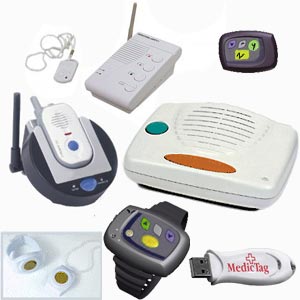
The panic button in an emergency medical alert
device when pressed activates the medical alert base unit. This is plugged into
any telephone jack. The medical alert alarm system calls into the Rescue Alert
Response Center which specializes in medical emergency alarm monitoring. An attendant in the Response Center immediately speaks to the subscriber through the medical alert base unit's two way voice speaker. Now the subscriber explains his/her emergency condition and the Response Center
attendant alerts the subscribers' personal responders be it family, friend or
any emergency services.
Types of medical alert devices
Medical alert devices come in several shapes and
designs. They appear as buttons, necklaces, pendants or wrist watches. Many are
designer made. They come made of precious metals like gold or silver and in
practical shapes. Nowadays, with the number of image conscious wearers who
dislike advertising their medical problems to others on the rise, fashionable
and artistic designer medical alert devices are on the increase.
Medical identification tag
This refers to an emblem or tag that is worn on a
bracelet, neck chain or clothing bearing pertinent information on the medical
condition of the wearer who might require emergency medical attention. The
intention is to alert a doctor, or emergency department personnel of the
condition of the wearer who would not be conscious enough to explain. Some
people instead may prefer to carry a wallet card with the same information.
Medical alert jewelry
Gone are the days when medical alert jewelry was nothing but a tag on a chain worn around the neck and hidden beneath the clothing. Stylish designer medical jewelry has come to stay. All the medical information is intact beneath a beautiful bracelet or necklace. The shimmer of the pearls and the reflection of the crystals in a medical alert jewelry could rival any elegant jewelry. Latest designs with silver beads and pink Swarovski crystals set in gold add a touch of brilliance with the medical tag attached easily to its clasp.
Perhaps the concept of medical alert jewelry developed to make the medical alert devices more popular and acceptable. It was an effort to make the medical alert devices more fashionable and accessible. These devices take various forms such as medical alert bracelets, necklaces, anklets, rings, shoe tags, charms, wristwatches, jelly bands, sport bands and pendants.
Medical alert jewelry has opened the door to a whole new world of style possibilities. Several celebrities, health care professionals and fashion magazines are embracing the new trend in fashion forward health alert jewelry.
-
Medical alert bracelets could be a higher grade non corrosive stainless steel
bracelet or a 925 silver or 14k gold. Trendier medical identification bracelets
come in stately combinations of leather with stainless, rubber with stainless
or beaded sterling. Stylish cuff medical id bracelets and bangle medical alert
bracelets are most popular.
-
Teenage girls would prefer to wear a delicate
ankle bracelet with a dangling charm or a small engraved plate. Lovely beaded
bracelets are fun, while decorative bracelets can complement any style. Men can
accessorize discreetly sporting a wrist bank or a handsome watch band.
-
The nature of the emergency conditions warrants
the wearing of such medical alert bracelets. For instance, diabetics' medical
alert bracelets are imperative because a diabetic can have medical emergencies
any time. Medical mistakes could be made if such people are not with someone
who knows their medical condition specifics.
-
Medical alert necklace is a
great alternative to the bracelet and could be tucked easily into the shirt. It
could also be worn outside the clothing as a decorative piece of jewelry.
- Medical alert necklaces come made of diverse materials such as silver, gold or titanium. The
necklace can either hold an alarm pendant or it could be personalized using the
beaded necklace that come in various forms and colors. Medical alert necklace
is a 'must have' accessory for those requiring special medical attention.
-
Medical alert pendants : There are
pendants which symbolize the medical situation of a person in a unique manner.
For instance, pendants are available in the shape of peanut, symbolizing an
allergy to peanut. Stainless steel medical id pendants are made of 316L
surgical stainless steel. Some are made of 304L stainless steel. Both are
hypoallergenic. Whereas 316L stainless steel is non corrosive. Medical pendants
are custom engraved with medical information.
Medical alert watches
Attractive medical alert watches for women and
men come in a myriad colors. It could be
a stylistic square faced wrist watch set with a band of large sterling silver
beads that could suit any female regardless of her age. The medical tag appears
in the closure of the watch band and is conveniently hidden on the underneath
of the wrist.
USB Medical alert tag
The USB medical alert tag is essentially a USB flash drive. This contains individual's emergency
information. The memory factor in the USB medical alert tags is capable of
carrying much more information than the conventional medical ID bracelets.
Necessary information such as medications, existing conditions, doctors and
emergency contacts can all be stored on the USB tags. The USB tag also enables
the user to update the information as needed to provide current information to
emergency personnel through any computer system.
Typical diseases and conditions warranting the use of medical alert devices
-
Alzheimer's
disease
-
Autism
-
Rare blood group
-
Drug allergies
-
Epilepsy and any
other seizure disorders.
-
Diabetes of all
age groups
-
Asthma
-
Food allergies
-
Pacemaker and
other implantable medical devices
-
Blood thinners
such as warfarin
-
Chronic illness
-
Acute porphyria
-
Psychological
disorders
-
Elderly people and kids who cannot look after
themselves
Choosing a medical alert device
Millions of people all over the world suffering
from various medical problems are now using medical alert devices. The market is
flooded with fashionable medical jewelry which could be expensive. It is
therefore recommended to seek a doctor's advice before deciding on a
sophisticated and costly device. Wherever the product is purchased, necessary care
should be taken to check on the reputation of the manufacturer, quality of the
product, guarantee and its effectiveness and after sales service.
It would be always wise to choose medical alert life savers that combine attractive accessorizing with clear spotlight on medical data. Always remember, that a visible and obvious message is essential to assist medical personnel make fast and accurate assessments.
Top of the Page: Medical Alert Devices
Tags:#medical alert watches #medical alert devices #medical alert tags #medical alert jewelry #medical alert bracelet #medical alert necklace #medical alert pendant
 Healthy Habits for Women
 Obesity indicator - ABSI Calculator
Fighting Diabesity
Depleted Immune System
Gonzalez Regimen for Cancer
Irritable Bowel Syndrome
Inflammatory Bowel Disease
Healthy Eating Habits
Diabetes Prevention Tips
Ankle Edema
Deep Vein Thrombosis
Colon Cleansing
Women and Substance Abuse
Water Retention Causes
Improving Blood Circulation
More on Women Health
 Shortness of Breath
 Eosinophilic Esophagitis
Feminine Hygiene
Nail Fungus
Antidepressants and Weight Gain
Iron deficiency Anemia
Avian Flu Pandemic
Mood swings and women
Medical Alert Devices
Hypokalemia
Metabolic Syndrome X
Heat Stroke
Altitude Sickness
Body Sculpting
Gout Symptoms
Polymyalgia Rheumatica
Systemic Lupus
Reflex Sympathetic Dystrophy
Carcinoid
Chronic Sciatica
Diet and Kidney Disease
Loss of Appetite
Suppress Appetite
How to Improve your Memory
Short Term Memory Loss
Leg Cramps at Night
Top of the Page: Medical Alert Devices
Popularity Index: 101,732