
Neck Pain Causes

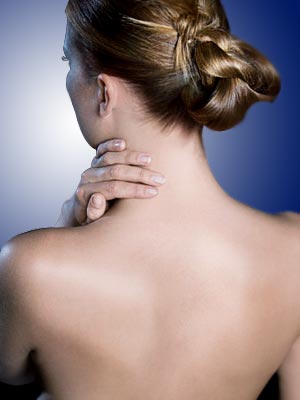
Many of us face neck pain at some point of time - Most of them are minor or self-curative though few neck pains are more serious. A variety of causes including muscular tightness in both neck and upper back or joint disruption, or pinching of nerves from the cervical vertebrate leads to neck pain. A neck pain or Cervicalgia either causes a pain at the neck joint or creates a feeling of stiffness, soreness or cramps in the neck.
Neck pain causes
The lower neck and upper back that supports the head are the common areas that are prone to neck pain. Most
of the movement of neck and head is because of the top three joints that make
the head firmly sit on the neck. An adverse affect on any of these joints
tightens the muscle in the area leading to a neck pain.
Injuries: The cervical vertebra that surrounds the spinal cord and the canal is the supporting block of the spine in the neck. The vertebrae pass through the nerves and discs of the neck. An injury to the bones or these joints through motor vehicle or driving accidents or falls or sporting activities may cause neck pain.
The neck area also includes muscles, arteries, veins, lymph glands, thyroid gland, parathyroid glands, esophagus, larynx, and trachea. Disease or an adverse condition of any of these soft tissues may cause neck pain. Certain automobile collisions or road accidents resulting in whiplash injury may cause neck pain.
Degenerative and Inflammatory Disease:
Most old people may face
neck pain due to degenerative diseases like osteoarthritis and rheumatoid
arthritis. As people grow older, their joints also become weak resulting in
neck pain.
Neck pain may also result due to cervical disk degeneration where the normal gelatin-like center of the disk that degenerates and the vertebrae become narrow. Such damage becomes severe when extra stress is applied to the joints. Few cases might also lead to herniated cervical disk where the cervical disk may protrude and cause pressure on the spinal cord or the nerve roots.
Other causes of neck pain might include incorrect posture while sleeping or constant use of computer. Some rare causes for neck pain include slipped disc, brittle bones (osteoporosis), deformed natural curvature of the spine (scoliosis), tumors, infections or congenital abnormalities of the vertebrae.
Neck pain symptoms
Most neck pain is associated with dull aching that is felt when you move the neck. Following are few symptoms
associated with a neck pain.
-
numbness around the neck area
-
tingling, tenderness or shooting pain in the neck
-
stiffness in your neck muscles
-
difficulty swallowing
-
dizziness or lightheadedness
-
radiation of neck pain to shoulders
-
radiation of neck pain into the back
-
radiation of neck pain into arms, hands and up to head
resulting in one-sided or double-sided headache
-
abnormal neck posture where the head is forced to turn
to one side (torticollis)
Few cases of neck pain may also result in meningitis. Seek immediate medical attention if you have any of the following symptoms
-
a rash in the neck area that do not fade if pressed
with finger or object
-
neck pain that is associated with fever or illness with
higher temperature
-
if the light causes pain to your eyes
-
neck pains associated with severe headache or vomiting
-
neck pain associated with severe back pain
-
difficulty in
bending your neck forward.
Neck pain may also be a symptom of head injury or disc trouble in the neck. Hence, if you have any of the following symptoms, seek immediate medical attention.
-
neck pain caused as a result of injury accompanied by
drowsiness or vomiting
-
neck pain accompanied by headache
-
neck pain along with pain behind one eye
-
if your vision, hearing, taste or balance is affected
associated with a neck pain
-
severe vomiting
-
neck pain associated with reduced muscle powers in arms
and legs.
Neck pain diagnosis
Upon your report of symptoms, the doctor might diagnose
the location of the pain and check for the intensity, duration, and radiation
of pain through various methods. The doctor examines the neck in both rest and
motion, detects the tenderness during palpation of the neck. In order to ensure
that no nerve involvement is present in the neck pain, the doctor might
prescribe you for an examination of nervous system. Based on your condition the
doctor or chiropractor might prescribe you for tests like X-ray, CAT scan, bone
scan, MRI scan, myelogram, and electrical tests like electromyography (EMG),
and nerve condition velocity test (NCV).
Neck pain relief
Most neck pains are effectively treated with rest, medication, immobilization, physical therapy, exercise, activity modifications, traction, heat/ice applications, soft collar, traction, local injections of
cortisone or anesthetics, topical anesthetic creams, topical pain patches, muscle relaxants and analgesics.
You can gain some neck pain relief by using the right pillow - one that provides cervical support to align your head and neck for sleeping. You can alternatively use a feather pillow and roll a small towel and tuck it in to support your neck. Ice packs or cold massage might help reduce inflammation, swelling and neck pain. For some, heat application through a heat pad or hot water bottle might give relief from neck pain.
Neck pain treatment
Medications - Non-steroidal anti-inflammatory drugs (NSAIDs) or analgesics like acetaminophen and other muscle relaxants such as orphenadrine, tizanidine are often recommended for neck pains. Topical creams may be prescribed in few cases of patients with neck pain.
Treatment Procedures - Neck pain that arises at the bottom of the skull disappears without treatment. Whereas neck pain caused by inflammation is treated with rest and neck collar for a short period. The doctor might also prescribe some medications to reduce inflammation. Physical therapies such as mobilization or manipulation are prescribed for chronic and acute neck pains.
Self-Help Techniques : You can also try few self-help techniques like stretching and strength building exercise to ease neck pain. Neck pain is often associated with the sitting posture of an individual. Forward stooped posture interrupts or strains the normal cervical lordosis resulting in severe back and neck pain.
Surgery: Surgery is the last option for neck pain and is recommended in very rare cases where the pain is developed due to the instability, cancer, severe spinal cord compression, and failure to physical therapy after long months. Surgery is not a choice for pinched nerves or herniated discs.
Top of the Page: Neck Pain Causes
Tags:#neck pain causes #neck pain relief #neck pain symptoms #neck pain treatment
Stress and Brain Damage
Lewy Body Dementia
Pervasive Development Disorders
Sinus Infection
Computer Vision Syndrome
Lasik Eye Surgery
Xerophthalmia
Dry Eye Syndrome
Peripheral Neuropathy
Cerebral Palsy
Migraine Headache Symptom
Low Blood Sugar Headache
Dizzy Spells
Tinnitus
Oral Hygiene
Halitosis
Treatment for Gingivitis
Neck Pain Causes
Whiplash Injury
Other health topics in TargetWoman Women Health section:
General Women Health

Women Health Tips - Women Health - key to understanding your health ...
Cardiac Care
Women's Heart Attack Symptoms - Identify heart problems...
Skin Diseases
Stress Hives - Red itchy spots ...
Women Disorders
Endocrine Disorder - Play a key role in overall wellbeing ...
Women's Reproductive Health
Testosterone Cream for Women - Hormone replacement option ...
Pregnancy
Pregnancy - Regulate your lifestyle to accommodate the needs of pregnancy ...
Head and Face
Sinus Infection - Nearly 1 of every 7 Americans suffer from ....
Women and Bone Care
Slipped Disc - Prevent injury, reduce pain ...
Menstrual Disorders
Enlarged Uterus - Uterus larger than normal size ...
Female Urinary Problems
Bladder Problems in Women - Treatable and curable ...
Gastrointestinal Disorders
Causes of Stomach Ulcers - Burning feeling in the gut ...
Respiratory Disorders
Lung function Test - How well do you breathe ...
Sleep Management

Insomnia and Weight Gain - Sleep it off ...
Psychological Disorders in Women
Mood swings and women - Not going crazy ...
Supplements for Women
Women's Vitamins - Wellness needs...
Natural Remedies

Natural Diuretic - Flush out toxins ...
Alternative Therapy
Acupuncture Point - Feel the pins and needles ...
Top of the Page: Neck Pain Causes
Popularity Index: 102,323