
Lasik Eye Surgery

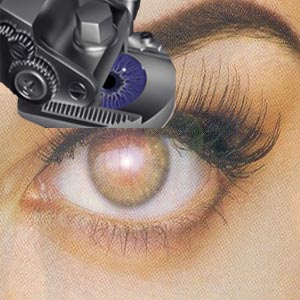
LASIK eye surgery or LASIK corrective eye surgery is a type of refractive surgery for correcting myopia (nearsightedness), hyperopia (farsightedness) and astigmatism. In other words, LASIK is a treatment that uses laser lights to fix your eyesight. Until the invention of contact lenses, eyeglasses alone were used to correct refractive vision errors. Modern techniques like Lasik, Photo refractive keratectomy (PRK) are performed for surgical insertion of artificial lenses to correct eyesight.
LASIK Eye Surgery
Blurred vision is the failure of the eye's cornea and lens to refract light rays properly, which affects the images from being focused on the retina. Such blurriness is termed as refractive error. The major causes for refractive error include imperfectly shaped eyeball, cornea or lens.
LASIK stands for Laser Assisted In Situ Keratomileusis. The procedure involves permanently changing the shape of the cornea for better eyesight. Ophthalmologists use an excimer laser and special knife (microkeatome) to conduct the reshaping. LASIK is often preferred to PRK, since the pain is less and the overall recovery period is faster. The main objective behind LASIK eye surgery is to reduce the patient's dependency on contact lenses or glasses.
LASIK Eye Surgery Procedure
Before LASIK, you will be examined completely for any health related issues and the doctor also ensures that your eyes are healthy enough to undergo laser surgery. Few tests are done to measure the curve of the cornea, the size, and position of the pupils, the shape of the eyes and the thickness of the cornea. The tests enable the ophthalmologist to ensure that laser or LASIK eye surgery is an option to you.
LASIK is an outpatient surgical procedure lasting for 10 to 15 minutes for each eye. No anesthetic is used during the surgery. However, an eye drop is applied to numb the surface of the eye.
Ophthalmologists use a microkeratome, a special knife to cut a hinged flap of the corneal tissue. The flap is then folded to reach stroma, the middle section of the cornea, where actual reshaping takes place. An excimer laser is put into the storma, to vaporize a predetermined portion of the cornea. In other words, pulses from the laser lights reshape the middle portion of the corneal tissue. Once the reshaping is done, the flap that was folded is replaced on the stroma. No stitching is required as both the tissue layers heal through natural process.
However, your ophthalmologist might place an eye shield or patch over the eye to protect the flap and prevent from rubbing or pressure on the eye until it is healed.
Recovery from Lasik eye surgery
The recovery period varies from person to person depending on how poor the eyesight is. According to a survey, more than one million Americans undergo LASIK surgery each year. Also, the LASIK surgery statistics and information from the FDA indicate that complication occur in just 1 to 5% of patients. The procedure is found to provide exceptional results with many patients experiencing more than 20% better vision
after LASIK eye surgery.
Your ophthalmologist might give you some instruction like wearing a protective shield over the eyes for couple of days after the surgery. This may be combined with few antibiotics, anti-inflammatory or moistening eye drops. You may also be suggested to wear dark eyeglasses for few days in order to avoid bright lights after surgery.
You can return to your work or daily activities the day after the surgery. Ensure to have follow-up check as suggested by doctors.
Lasik corrective eye surgery risks
Any surgical procedures has its own risks, LASIK is not an exception. Though the degree of risks varies from surgery to surgery, it cannot be ignored altogether.
The risks with LASIK include the technology. The procedure is relatively new and things might go wrong over a period of time. However, there is no clinical indication to this. Few people report that they develop glare, halos or double vision that affects nighttime vision after a corrective laser eye surgery.
The effectiveness of your LASIK eye surgery depends on the ophthalmologist too. You may be under-treated or over-treated. Some might still require contact lenses or glass after surgery.
Few risks associated with LASIK may include
- Corneal infection
- Corneal scarring or permanent problems with the cornea's shape, making it impossible to wear contact lenses
- Decreased distance vision at high altitudes
- Decrease in contrast sensitivity - even with 20/20 vision, objects may appear fuzzy or gray
- Dry eyes
- Glare or haloes
- Light sensitivity
- Night driving problems
- Patches of red or pink in the white of the eye
- Reduced vision or permanent vision loss
- Scratchiness
However, there is no specific risk that has been reported so far with LASIK. The long-term effects of LASIK are yet to be determined.
Cost of LASIK
The cost of LASIK depends on your requirement. In addition, it varies from one surgeon or clinic to another. In general, the universal standard for LASIK is that the price is quoted per eye.
The factors involved in deciding the rate include the number of eyes on which surgery is performed, new technologies (like wavefront correction LASIK) used for precise corrections, laser blades used, or bladeless LASIK (IntraLase) where a laser is used to create a flap in front of the eye. Remember one LASIK equals a surgery on one eye alone.
LASIK costs anywhere between $450 to $2000 per eye but it hinges on the surgeon and technology used. A research conducted among refractive surgeons indicates that the cost of bladeless LASIK or LASIK with all laser-based vision corrections procedure is $2,150. Few other interesting indications include that usage of microkeratome and excimer lasers in LASIK might cost $1,750. The fees for precise corrections using wavefront might be around $2,300.
If you wish to undergo LASIK, do not take the cost alone into consideration. Look for few associated factors like the service provided by each clinic. For instance, few clinics might offer you to stay in the clinic at little or free of cost after the surgery. This is applicable in cases where the clinic is far away from your home or office. Find out the technologies used by the ophthalmologist. While comparing the cost of LASIK, find out the technology or the equipment used by the laser surgeon. Finally, check the cost against inclusive. Few clinics LASIK costs include the examination before surgery, the post check-ups.
Good eyesight is the priority. Hence, ensure that the surgeon is highly qualified and has considerable amount of experience in handling all LASIK cases. Lastly, though a full coverage is not given, most insurance providers give part coverage for laser eye surgery. Check with your health insurance provider on the same before you decide to undergo LASIK.
Top of the Page: Lasik Eye Surgery
Tags:#lasik eye surgery #lasik eye surgery risks #lasik eye surgery procedure #lasik eye surgery costs #lasik eye surgery recovery #lasik corrective eye surgery
Stress and Brain Damage
Lewy Body Dementia
Pervasive Development Disorders
Sinus Infection
Computer Vision Syndrome
Lasik Eye Surgery
Xerophthalmia
Dry Eye Syndrome
Peripheral Neuropathy
Cerebral Palsy
Migraine Headache Symptom
Low Blood Sugar Headache
Dizzy Spells
Tinnitus
Oral Hygiene
Halitosis
Treatment for Gingivitis
Neck Pain Causes
Whiplash Injury
Other health topics in TargetWoman Women Health section:
General Women Health

Women Health Tips - Women Health - key to understanding your health ...
Cardiac Care
Women's Heart Attack Symptoms - Identify heart problems...
Skin Diseases
Stress Hives - Red itchy spots ...
Women Disorders
Endocrine Disorder - Play a key role in overall wellbeing ...
Women's Reproductive Health
Testosterone Cream for Women - Hormone replacement option ...
Pregnancy
Pregnancy - Regulate your lifestyle to accommodate the needs of pregnancy ...
Head and Face
Sinus Infection - Nearly 1 of every 7 Americans suffer from ....
Women and Bone Care
Slipped Disc - Prevent injury, reduce pain ...
Menstrual Disorders
Enlarged Uterus - Uterus larger than normal size ...
Female Urinary Problems
Bladder Problems in Women - Treatable and curable ...
Gastrointestinal Disorders
Causes of Stomach Ulcers - Burning feeling in the gut ...
Respiratory Disorders
Lung function Test - How well do you breathe ...
Sleep Management

Insomnia and Weight Gain - Sleep it off ...
Psychological Disorders in Women
Mood swings and women - Not going crazy ...
Supplements for Women
Women's Vitamins - Wellness needs...
Natural Remedies

Natural Diuretic - Flush out toxins ...
Alternative Therapy
Acupuncture Point - Feel the pins and needles ...
Top of the Page: Lasik Eye Surgery
Popularity Index: 101,458