
Female Condom

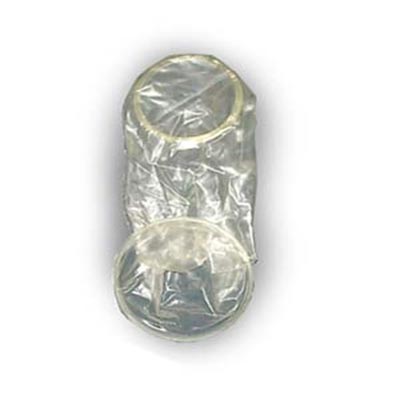
One of the newer contraceptive devices, the female condom allows the woman to protect herself from unwanted pregnancy and sexually transmitted diseases. Available in the European markets since 1992, the female condom was approved by the FDA in 1993. It is relatively expensive as compared to other contraceptive measures. There is encouragement for the use of the female condom from WHO and UNAIDS since it is effective in attending to the reproductive health needs of women. It can be effective in the prevention of HIV and AIDS and sexually transmitted diseases (STDs).
There are 2 types of female condoms available in the United States - one made of polyurethane and the other of synthetic nitrile. Female condoms are found to be 95% to 98% effective in preventing pregnancy which means that if used properly, only 5 in every 100 women who use the condoms will get pregnant each year. A female condom looks much like an elephant trunk. But it is an option that can give you a lot of control over your sexual health. Interestingly, while female condoms have been around for the last two decades, they somehow never got as popular as male ones.
And that is perhaps the reason why only 3 million female condoms are made each year compared to the 1500 odd million male condoms. Yet, female condom is here to stay - to play an important part in preventing STDs and unwanted pregnancies. Above all, this will also eliminate the dependence on males for contraception.
Female condom
This contraceptive device was invented to Dr. Mary Ann Leeper as a measure to control the growing HIV epidemic, especially in the African continent and other developing nations. Female condoms are made of polyurethane and are about 17 cm long with a flexible ring at both ends. This contraceptive device is worn by a woman and acts a barrier method of preventing pregnancy. This sheath lines the vagina and has no serious side effects. The biggest advantage that the female condom offers over other contraceptive devices is that it offers protection not only from unwanted pregnancies but also sexually transmitted diseases including HIV and AIDS.
Contraception for women
Female condoms are odorless and soft but stronger than latex. The inner ring at the closed end is used for insertion of the female condom and it is placed behind the pubic bone. The outer end is soft and remains outside the vagina. This contraceptive method comes with a lubricant. Female condoms score over the male condoms in that it is made of polyurethane or nitrile and can be used even when you are allergic to latex. And hence, female condoms are suitable for most women. Female condoms can be inserted hours before sex and don't need to be removed immediately afterwards.
Female condoms do not require a prescription for purchase nor do you need help from a health professional for its use. You have the liberty to buy the condom across the counter as no prescription is necessary, though it is a lot harder to find female condoms than the male ones. Women using this barrier method do not suffer hormonal side effects. This form of contraception can be used during menstruation and after recent childbirth. Costing about $2 to $5, the female condom is more expensive than the usual male condoms. Since it is recommended to use a new one each time, this can be a costly contraceptive measure. Any tear in the female condom makes it ineffective.
Top of the Page: Female Condom
Tags:#female condom #contraception for women

Women Health Tips
Contraception Guide
Birth Control Patch
Birth Control Shot
Birth Control Pill
Emergency Contraception
Tubal Ligation Reversal
Birth Control IUD
Birth Control Rings
Female Condom
Top of the Page: Female Condom
Popularity Index: 100,527